Rosemary’s Baby
Comprehensive Storyform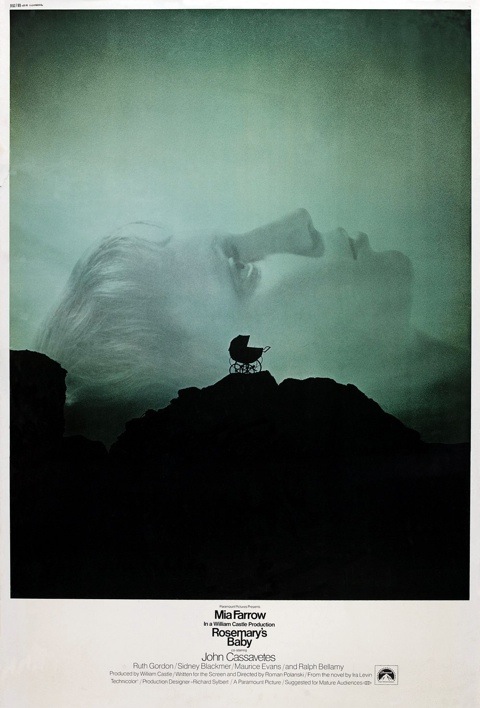
The following analysis reveals a comprehensive look at the Storyform for Rosemary’s Baby. Unlike most of the analysis found here—which simply lists the unique individual story appreciations—this in-depth study details the actual encoding for each structural item. This also means it has been incorporated into the Dramatica Story Expert application itself as an easily referenced contextual example.
Story Dynamics
8 of the 12 essential questions
- Change
- Main Character Resolve
Rosemary changes in her feelings toward Guy (evidenced by spitting on him), and in her refusal to accept that anything is wrong with her child. Her ambivalent feelings about Catholicism are resolved as well. At the climax of the story, Rosemary overcomes her revulsion to the baby and chooses to be a mother to him, despite the fact that Satan is the father.
- Start
- Main Character Growth
Rosemary must take charge of her own life and that of the baby’s.
- Be-er
- Main Character Approach
Rosemary tries to accommodate everyone before herself. She agrees to the dinner invitation with the Castevets, even though she doesn’t want to go. Then she feels obligated, but tells Guy that it’s all right if he doesn’t want to attend. When Rosemary learns she is pregnant, she lets the Castevets push her into giving up a doctor she likes for one they recommend. Even though she is in great pain, she finds a way to adapt to it rather than confront her doctor:
Tiger: You’ve been in pain since November and he (Dr. Sapirstein) isn’t doing anything for you?
Rosemary: He says it’ll stop.
Joan: Why don’t you see another doctor?
Rosemary shakes her head.
Rosemary: He’s very good. He was on “Open End.” - Female
- Main Character Mental Sex
The female mental sex character resolves problems by comparing surpluses to deficiencies, and then taking steps to create a balance. When Guy first refuses to go to the Castevets for dinner, even though Rosemary makes it clear that she promised Mrs. Castevet, she begins reasoning out loud why they should stay home—creating a surplus of reasons acquiesce to Guy’s wishes. She doesn’t push Guy, but eventually he says, “Let’s go.” When her pregnancy becomes a seeming never-ending agony, and no one will listen to her, she throws a party where her friends can assess her shocking physical and emotional condition and push her to see a new doctor. When she grows weary of Minnie’s meddling, she accepts Minnie’s “herbal” drink, but then pours it down the drain. Thus she is dealing with the immediate surplus, but not yet taking steps to resolve the whole problem. When she discovers the truth about her baby, she is armed with a butcher knife as if she is willing to strike at one of the perpetrators, or even her baby. But she is confronted with a different inequity: the need of her baby. The story ends with Rosemary “becoming” the mother to her child, having seen the real deficiency in the situation, the baby’s lack of a mother.
- Decision
- Story Driver
Rosemary and Guy’s decision to break their lease and take the apartment at the Branford is the initial catalyst for the story. Guy’s agreement to have dinner with the Castevets leads to the unspoken offer of trading his wife for his career. It is Guy’s decision to agree to the scheme that puts the plot in motion. At the climax of the story, it is Rosemary’s decision to become a real mother to her child that resolves the story problem.
- Optionlock
- Story Limit
There are only so many people Rosemary can turn to for help. One by one they are eliminated until the baby is born.
- Success
- Story Outcome
The Satanic cult has a mother for the Devil; Rosemary gets the child she longs for, and she becomes the baby’s real mother in every sense of the word.
- Good
- Story Judgment
Rosemary is finally in control of the situation and she has the baby she has longed for.
Overall Story Throughline
""Hail Satan!""
- Physics
- Overall Story Throughline
The objective story takes place against the endeavor to bring Satan into the world in the form of a baby. The cult makes a deal with Guy to coerce his wife into bearing Satan’s child. Guy stakes his future career on this agreement. The entire cult participates in the rape. Minnie makes herb drinks and cakes; she checks in on Rosemary at all times. Guy rushes home to stop Hutch from interfering with the cult. Rosemary’s friends try to tell her what a pregnancy should be like, encouraging her to take action. Tension increases as Rosemary begins to discover the truth. She runs away, thinking Dr. Hill will help. The cult immediately forces her back, drugs her, and takes away her newborn. Rosemary takes the initiative to find the baby, and upon discovering that it is the Devil—she attempts to kill it. The baby cries out for his mother, thereby saving his own life.
- Obtaining
- Overall Story Concern
Rosemary wants to live in the Branford, despite Hutch’s warnings. She longs for a child. The cult wants an heir for Satan. Guy wants fame and money, starting with the part he lost to Donald Baumgart. Guy gets the part when he sells his wife to the Devil. Donald “mysteriously” loses his eyesight. When Rosemary finally expresses her dislike of Dr. Sapirstein, she proclaims, “I want Dr. Hill!” The baby wants his mother.
- Morality
- Overall Story Issue
Taking a morally ambiguous action, Terry kills herself rather than doing what is best for the cult—submitting herself to the Devil. Rosemary consistently puts the interests of others before her own, making her a perfect candidate for the cult. Rosemary does what Guy, Minnie and Roman, and Dr. Sapirstein want her to do. When she tries to escape, it’s because she is looking out for her baby. Dr. Hill believes he is doing what is best for Rosemary and her baby when he betrays her trust. In the end, it is the baby’s needs that override Rosemary’s idea to eradicate the evil being.
- Ability
- Overall Story Counterpoint
Rosemary’s moment of self interest comes at the beginning of the story, when she insists on moving into the Branford. The cult acts purely out of self interest—they want an heir for Satan. Guy acts out of self interest—he wants fame and fortune no matter what the cost is to Rosemary or any others:
Guy: They promised me you wouldn’t be hurt, and you haven’t been, really. I mean, suppose you’d had a baby and lost it; wouldn’t it be the same? And we’re getting so much in return, Ro. - Overall Story Thematic Conflict
Morality vs.AbilityRosemary’s moment of self interest comes with a heavy price. She insists on moving into the Branford, and ends up in the hands of the cult. Guy gives into self interest and agrees to drug his wife and give her to Satan. He gets his career, but loses Rosemary. Rosemary consistently puts others’ needs ahead of her own. This leads to her being overwhelmed by the interests of the cult. At the end, she is sure her baby is alive, and she intends to save him. Only when she sees him does the whole truth become clear. At that moment she finally comes into a kind of balance between morality and self interest: she gets the child she wants, and puts his interests ahead of her own.
- Disbelief
- Overall Story Problem
“Disbelief” is the source of the objective story’s problems. Hutch warns Rosemary and Guy about the Branford, but they do not believe him. As evidence begins to build against the inhabitants of the building (not to mention the inhabitant inside her body), Rosemary still refuses to believe anything unnatural is occurring. Her friends influence her to question the way her doctor is treating her, but her pain suddenly stops and she becomes even more blind to what is happening. When Rosemary discovers there is a conspiracy and turns to Dr. Hill for help, he finds her story unconvincing and simply turns her over to Guy and Dr. Sapirstein. After the birth of the baby, she doesn’t believe her baby is dead and forces the issue with the cult.
- Faith
- Overall Story Solution
“Faith” is necessary to solve the objective story problem of “disbelief.” The cult has faith that Guy can be corrupted. Hutch dies confident that Rosemary will be able to decode his message and discover the truth. Rosemary has to trust her old friend and her own instincts even though hard evidence doesn’t really exist. For example, after Guy throws away Hutch’s book, she buys her own books on witchcraft. Rosemary believes her child is alive even before she begins to hear him crying. This unfounded belief drives her to ultimately discover the child in the apartment next door. Rosemary’s faith in herself as a mother, and Roman’s unquestioned trust that she would never harm her child, allows her to take her rightful place as Satan’s caretaker.
- Conscience
- Overall Story Symptom
The objective characters deal with the effects of the problems caused by “disbelief” by focusing on “conscience.” Guy’s conscience is pricked momentarily when he is informed of Donald Baumgart’s accident. Rosemary’s conscience is an easy target for the cult, her doctor, even Guy. She is so determined to do what is right for her baby she is willing to tolerate great pain. When she doubts the wisdom of the advice she is given, she is told it’s “all for the baby.”
- Temptation
- Overall Story Response
The objective characters direct their efforts toward “temptation.” Guy’s conscience is assuaged once he is offered Donald Baumgart’s part. Rosemary finally has to give in to the temptation of her own instincts. She reads books on cults and decides to take action. But the ultimate temptation is to become mother to the child of Satan, the Biblical Anti-Christ, without apparent regard for the consequences.
- Approach
- Overall Story Catalyst
The methods in which the objective characters use to solve their problems—witchcraft in particular—accelerates the story forward.
- Obligation
- Overall Story Inhibitor
The Castevets play upon Terry’s obligation to them in hopes she will bear Satan’s child. Her refusal is a temporary interruption in the progress to achieve their goal. Rosemary’s sense of obligation to Guy, to the Castevets, and to Dr. Sapirstein, keeps her from fleeing to another doctor even when the pain is great. Guy uses Rosemary’s sense of obligation to stop her from seeking a second opinion saying, “It wouldn’t be fair to Sapirstein!”
- Learning
- Overall Story Benchmark
Progress in the objective story is measured by how much information is gathered. The cult acquires information about Rosemary. “Do you have children?” Do you want children?” “Do your sisters have children?” Guy learns about the cult. Rosemary tries to learn everything she can about pregnancy. When she begins to suspect a problem, she has to gather information about witchcraft and Satanic cults. At the end she is driven to learn the truth about her baby.
- Overall Story Throughline Synopsis
A Satanic cult resides at the Branford apartment building when Rosemary and Guy Woodhouse move in. The cult is determined to find a woman to bear Satan’s child. By promising Guy a successful acting career (through the use of witchcraft) they persuade him to give Rosemary to Satan. She is drugged, raped, and impregnated by Satan. She learns too late that there is a conspiracy to take her child, and ultimately discovers the entire truth—she has given birth to the Devil.
- Overall Story Backstory
The Devil wants a child and the cult is charged with finding a mother. Guy has been an actor for some time and wants to become a star. Rosemary wants a baby, and trusts that Guy has her best interests at heart. The country has fallen into a spiritual decline represented by the “Is God Dead?” headlines of the magazines.
Additional Overall Story Information →
Main Character Throughline
Rosemary Woodhouse — Mother
- Mind
- Main Character Throughline
Rosemary is determined to become a mother, despite the danger to herself and eventually to humankind.
- Subconscious
- Main Character Concern
Rosemary’s essential feelings of love and protection for her unborn child drive her to become a mother.
- Dream
- Main Character Issue
Rosemary lives in a kind of dream world. She believes her husband will put her needs first, although his actor’s ego make it highly unlikely. She believes her maternal love will transcend the evil of Satan.
- Hope
- Main Character Counterpoint
Rosemary is optimistic events will turn out all right. As an example, when she escapes to see Dr. Hill, she fully expects him to believe her story and help her to safety.
- Main Character Thematic Conflict
Dream vs.HopeRosemary’s eternal optimism allows her to maintain her dreams. For example, it is the hope that all will be well that allows Rosemary to believe in the dream that she can be successful at mothering the son of Satan.
- Disbelief
- Main Character Problem
Rosemary wavers in her religious beliefs: “I was raised a Catholic, but now I don’t know what I believe.” She refuses to accept that her husband could betray her, and the notion that her next-door-neighbors are witches is absurd. As her pregnancy becomes increasingly painful, she refuses to admit anything is wrong. Once Rosemary accepts the truth she has a new set of problems, she now distrusts her husband and the cult—she does not believe that her child is dead, despite the word of Guy and the doctor.
- Faith
- Main Character Solution
Rosemary has faith that she can take the child to term. Without proof, Rosemary holds to the belief that her child is alive and she can free him. By choosing to be a real mother to her child, she ultimately chooses faith in the Devil.
- Support
- Main Character Symptom
Rosemary focuses on emotionally supporting her husband, although he does not return the attention. She wants Guy to be more supportive, but excuses his behavior. She views the attention of Minnie and Roman as being too supportive—to the point of meddling.
- Oppose
- Main Character Response
Rosemary opposes Minnie’s unwanted ministrations when she stops eating the herbs. She protests against their senior citizen social circle when she plans a party for only their young friends:
Rosemary: Minnie and Roman are not invited. Neither is Laura-Louise. Neither is Dr. Sapirstein and Dr. Shand. This is a very special party. You have to be under sixty to get in. - Closure
- Main Character Unique Ability
Rosemary’s pregnancy ends with the birth of Satan, and her resolution to become his parent ensures the story’s success.
- Preconception
- Main Character Critical Flaw
Even in the face of her memory of being raped, Rosemary lets Guy convince her it was a nightmare. She listens to Hutch, but chooses to ignore the information. She is in great pain, but continues to believe in her doctor.
- Conscious
- Main Character Benchmark
The more Rosemary considers the evil she is enmeshed in, the more she is concerned with the state of her pregnancy and future of her child.
- Main Character Description
Young wife; easily led; trusting; more a product of the 1950’s than that of the rebellious 1960’s. Blond and pretty; waif-like. Has an untapped inner strength that she must learn to rely on. She wants very much to be a mother.
- Main Character Throughline Synopsis
Rosemary has very specific ideas about what her life, her marriage, and her child should be like. She will have to come to grips with the fact that she is wrong on all counts. Her struggle to maintain her belief, and her eventual giving in to the truth, is what her journey is about.
- Main Character Backstory
Rosemary comes from a large Catholic family with sisters who all have children. She very much wants and expects to be a mother. She is not particularly religious, but hasn’t quite joined the “God is Dead” movement either. Her nature is to be very trusting and compliant.
Additional Main Character Information →
Influence Character Throughline
Adrian (Satan) — Rosemary's Baby
- Universe
- Influence Character Throughline
For most of the story, the obstacle character is represented by an unseen presence—the unborn child. While the fetus grows and changes, the fact of the pregnancy is the situation that occupies the attention of all the objective characters.
- Future
- Influence Character Concern
The unborn child represents the Biblical coming of the Anti-Christ.
- Choice
- Influence Character Issue
The child forces Rosemary to choose between good and evil.
- Delay
- Influence Character Counterpoint
The baby is able to force its mother to defer seeking medical attention outside of Dr. Sapirstein.
- Influence Character Thematic Conflict
Choice vs.DelayAs the evidence mounts that something is wrong, Rosemary’s desire to have a child and take care of it inhibits her decision to take action. She makes the choice to ride out the pain, not really believing the depth of the conspiracy, until the choice is actually made for her. The pain subsides just as she is ready to take action, so she gives up. By the time she tries to fight the cult, she is unprepared, and her child is stolen. Even the climax comes down to a choice that is born of her delay. To be a mother to her child, she can only choose to give in to the cult.
- Feeling
- Influence Character Problem
The baby is driven to survive; to do so, it must play upon its mother’s maternal feelings.
- Logic
- Influence Character Solution
A rational sense of the relationship between mother and child is what will satisfy the baby’s drive. This point is better illustrated in the novel. At the end, after all the emotion, Rosemary makes a cold, logical decision to be the mother of her child. She realizes that the baby is not just the Devil’s, but hers as well. The only way to have her child is to BE its mother.
- Conscience
- Influence Character Symptom
Rosemary tolerates pain, apparent misinformation from her doctor, foul tasting herbal drinks, and the indifference of her husband for the sake of her baby. She is determined to have a child. This point also illustrates how the obstacle character is shared by the cult. They act as the voice of the unborn child, telling Rosemary what the baby needs. And because of her conscience, she listens to them.
- Temptation
- Influence Character Response
The cult successfully tempts Guy to give Rosemary to Satan. Then the baby itself tempts Rosemary to be its mother, even though the Devil is the father.
- Openness
- Influence Character Unique Ability
The baby successfully forces Rosemary to re-evaluate preconceptions about the Devil in order to be a mother to her own child.
- Denial
- Influence Character Critical Flaw
The cult almost loses Rosemary because of her stubborn refusal to give in to them once she understands what they want. Even though they re-capture her, at the end she will not let go of her baby, and thus is a force to be reckoned with.
- Present
- Influence Character Benchmark
The current situation of Rosemary’s pregnancy is the standard against which Satan’s concern for the future is measured.
- Influence Character Description
Evil
- Influence Character Throughline Synopsis
The obstacle character is Rosemary’s baby, represented by the actions of the cult until its birth.
- Influence Character Backstory
Satan wants his child born into the world. The cult is looking for the right woman to fulfill a Biblical prophecy.
More Influence Character Information →
Relationship Story Throughline
""Mother and Child""
- Psychology
- Relationship Story Throughline
The obstacle character is Rosemary’s baby, represented by the cult. Rosemary is manipulated by the obstacle character from conception to birth. For example, she is drugged and raped, not exactly what she had in mind for “baby night” with her husband; she is put into the medical care of a cult member, and ministered to daily by the witch next door. The ultimate manipulation Rosemary is vulnerable to is the baby’s cries for its mother.
- Becoming
- Relationship Story Concern
Satan is concerned with becoming a physical presence, a life force on earth, which conflicts with Rosemary’s religious beliefs. However, because Rosemary literally embodies the Devil child, and subsequently gives birth, her concern for becoming a mother overrides her conflicted feelings about evil.
- Responsibility
- Relationship Story Issue
The cult judges Rosemary to be the best candidate for Satan’s consort. She judges herself to be the best possible mother to her baby.
- Commitment
- Relationship Story Counterpoint
Rosemary sticks with her pregnancy despite great pain. She even declares to her friends, “I’m not getting an abortion!” She ultimately chooses to keep her commitment to the child even though his father is Satan.
- Relationship Story Thematic Conflict
Responsibility vs.CommitmentThis particular thematic conflict is an example of excellent storytelling. While Rosemary doesn’t proclaim to have great religious principles, the audience has a shared understanding of the stakes involved. Rosemary is compelled to choose between good and evil—the twist being a mother is “good” even though her child is undeniably “evil.” As she considers her parental responsibilities, she is forced to see the child for what it really is, and at the same time, she must weigh her responsibility to the world. Rosemary’s commitment to her child wins out.
- Uncontrolled
- Relationship Story Problem
It is a problem for Rosemary that she has no control over the conception of her child, her pregnancy, or even the birth. For the cult, (and the baby) it becomes a problem that they cannot always control Rosemary. This is the dynamic conflict at the climax of the story. Rosemary is brought to a defining moment of choice—remaining steadfast in her beliefs, or changing to become a mother to her own child. In that moment, the obstacle character has made its case, but cannot control Rosemary’s choice.
- Control
- Relationship Story Solution
Rosemary is manipulated by the baby’s cries to accept her role as mother to Satan, thus resolving all conflict.
- Conscience
- Relationship Story Symptom
Satan compels Rosemary to focus her attention on what is best for the baby using foul herbs, intrusive neighbors, and excruciating pain, thus effectively avoiding the real problem between them.
- Temptation
- Relationship Story Response
Rosemary occasionally falls to the temptation to rebel against Dr. Sapirstein; it is her attempt to control her pregnancy.
- Rationalization
- Relationship Story Catalyst
The use of “rationalization” acts as the catalyst to move the subjective story forward. Guy rationalizes going forward with the baby’s conception, despite Rosemary’s drugged induced state; Rosemary rationalizes that the pain must be normal because Dr. Sapirstein says so; Dr. Sapirstein and Guy use Rosemary’s pregnancy as an excuse for her “crazy” behavior to Dr. Hill; and so forth.
- Attitude
- Relationship Story Inhibitor
When Rosemary’s attitude changes, for example she demands a party despite what Guy says, she comes close to upsetting the plans of the cult. When she finally decides to escape, she almost gets away with it.
- Conceiving
- Relationship Story Benchmark
As Rosemary quite literally conceives baby Satan, and eventually accepts the idea of becoming his mother, the conflict between them dissipates.
- Relationship Story Throughline Synopsis
While the cult wants an heir for Satan, and goes to great lengths to assure success, the story hinges on the developing relationship between Rosemary and her baby. The concerns of the rest of the characters can only be resolved based on Rosemary’s decision. Ultimately, Rosemary’s maternal instincts will rule the day, despite the consequences for anybody else.
- Relationship Story Backstory
For the evil lineage of Satan to continue, new life must be created. Rosemary wants to be a mother, and conveniently for the cult, has a husband ready to exchange her for fame and fortune.
Additional Relationship Story Information →
Additional Story Points
Key Structural Appreciations
- Obtaining
- Overall Story Goal
The goal of “Rosemary’s Baby can be synopsized in one sentence as the adventures of an actor’s wife delivered to the devil and his worshippers by her ambitious husband so that she might bear the devil’s baby . . .” (Sarris 374)
- Becoming
- Overall Story Consequence
If the child is not born, Rosemary will not become a mother and the Anti-Christ will not become a new life force.
- Future
- Overall Story Cost
The birth of the child means a dark and foreboding future for humankind. Donald Baumgart is condemned to a future of blindness. Hutch’s life is cut short by the cult.
- Subconscious
- Overall Story Dividend
An example of a dividend accrued on the way to the goal is the fulfillment of Guy’s desire to become a famous actor.
- Learning
- Overall Story Requirements
The cult learns that Rosemary is a viable candidate to bear Satan’s child, and that Guy is willing to make a deal for stardom. Rosemary learns that Guy is suddenly ready to have a child.
- Conceiving
- Overall Story Prerequisites
Following Terry’s suicide as an attempt to escape the cult, the witches conceive of Rosemary as a possible mother for Satan’s child.
- Present
- Overall Story Preconditions
The world is in a state of ambivalence about religion. Even national magazines ask, “Is God Dead?” Rosemary states, “I was raised a Catholic, but now I’m not sure.”
- Conscious
- Overall Story Forewarnings
After confiding in her friends about her painful pregnancy, and taking into account their advice, Rosemary contemplates seeking another opinion, which could lead to a possible abortion.
Plot Progression
Dynamic Act Appreciations
Overall Story
- Doing
- Overall Story Signpost 1
The beginning of the story is filled with activity. Rosemary and Guy are looking for an apartment. Rosemary supervises workers as they paint and lay carpet. Guy acts in a commercial and auditions for parts. The cult chants.
- Overall Story Journey 1 from Doing to Obtaining
The Woodhouses take the apartment, move in, make love. While doing laundry, Rosemary meets Terry just before she kills herself. Minnie makes her presence known, insisting on Rosemary and Guy coming to dinner. Guy is auditioning, but missing out on the roles he wants. Roman tells him that he should be a star but he needs the “right breaks.” The two men have a long secretive talk. Guy becomes very interested in Roman. Minnie gives Rosemary the foul smelling locket that was Terry’s. Suddenly Guy gets a part he wants because the other actor had an accident. After being distant and cold to Rosemary, Guy decides he wants a baby—immediately.
- Obtaining
- Overall Story Signpost 2
Rosemary is drugged with the desert Minnie has concocted, and her body is possessed by Satan. She unknowingly is impregnated with the Devil’s child.
- Overall Story Journey 2 from Obtaining to Learning
Rosemary learns she is pregnant. Minnie, Roman, and Guy insist that she stop seeing Dr. Hill and be put under the care of Dr. Sapirstein. Rosemary attempts to learn everything she can about pregnancy, but her new doctor advises against it. Once Rosemary learns that Roman Castevet is really Steven Marcato, she passes that information onto Guy and Dr. Sapirstein—with the request her family have nothing more to do with the Castevets. At this point, Rosemary learns from Dr. Sapirstein that Roman is dying.
- Learning
- Overall Story Signpost 3
Rosemary’s friends learn of her pregnancy—and that’s she’s been in pain for far too long; Hutch learns more about Roman Castevet and the cult, but has a stroke before he can meet with Rosemary and pass on the information he has acquired. Later, Rosemary learns that Hutch has died, and she is given a book he wanted her to have—informed that his last words were, “It’s an anagram.” After reading the book, she learns about the history of witches in the apartment building, and with the help of a scrabble game, she realizes that Roman Castevet is the notorious Steven Marcato.
- Overall Story Journey 3 from Learning to Understanding
Dr. Hill does not understand the predicament Rosemary and her baby are in; Guy and Dr. Sapirstein learn from Dr. Hill that Rosemary is trying to escape from them. She gives birth and the child disappears. She is told by the doctor and Guy the child has died, but she believes he is alive.
- Understanding
- Overall Story Signpost 4
Determined to find out if her baby is indeed alive, Rosemary breaks through the closet door into the Castevets’ apartment and learns the truth: her child is also the child of Satan—she understands he is the Anti-Christ; Roman appreciates the only one who can truly mother the baby is Rosemary, and is able to make her understand this notion as well.
Main Character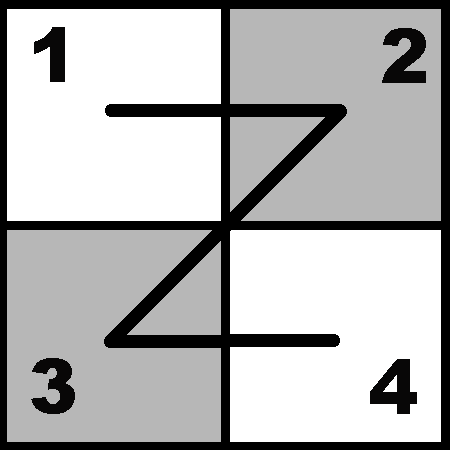
- Memory
- Main Character Signpost 1
Rosemary recites Guy’s resume from memory to their new acquaintances. She reminisces to Minnie about her childhood and family.
- Main Character Journey 1 from Memory to Preconscious
Rosemary has dreams of her childhood which seem to bleed into her present. She regards her awareness of being raped as a dream, but she does remember some details.
- Preconscious
- Main Character Signpost 2
Rosemary discovers she is pregnant, and almost immediately her instincts are questioned. She is told to go to a different doctor even though she likes Dr. Hill. She is told not to take vitamins or read about pregnancy even though her instincts tell her to do so. Her pregnancy becomes quite painful, but her doctor tries to convince her everything is fine.
- Main Character Journey 2 from Preconscious to Subconscious
Rosemary’s pain continues. She holds a party against everyone’s wishes and tries to stand up to Guy. The pain suddenly subsides and Rosemary goes back to being a compliant wife. Hutch’s book alerts her that there is a problem. She discovers who Roman is, and is moved to protect her baby.
- Subconscious
- Main Character Signpost 3
The discovery that Abe is part of the cult moves Rosemary to try to escape to protect her baby. She lies on a bed in Dr. Hill’s office telling her unborn child that all is well.
- Main Character Journey 3 from Subconscious to Conscious
Rosemary fails to escape, and her child is stolen. She is told he is dead, and is given drugs that keep her barely conscious. Certain he is alive, Rosemary secretly stops taking the medication, driven to discover all the facts surrounding her baby.
- Conscious
- Main Character Signpost 4
Once Rosemary has all the facts and knows the truth about her baby, she makes a conscious decision to be a mother to the child, despite the consequences to humankind.
Influence Character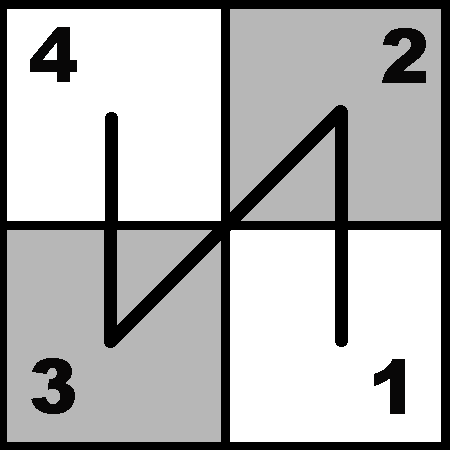
- Present
- Influence Character Signpost 1
As of now, the cult is seeking a woman to bear Satan’s child. Terry is their current choice.
- influence Character Journey 1 from Present to Progress
Rosemary meets Terry, not knowing she is the current “candidate” for the cult. Rosemary is established as a viable alternate after Terry’s suicide. Guy is convinced to make his deal with the Devil. Guy drugs Rosemary to effect the process.
- Progress
- Influence Character Signpost 2
The baby develops in Rosemary’s womb.
- Influence Character Journey 2 from Progress to Future
The baby’s development is threatened when Rosemary decides to investigate the pain it is causing. Once the baby stops the pain, its future is assured.
- Future
- Influence Character Signpost 3
At the threat of Rosemary seeking medical help outside of Dr. Sapirstein, the baby stops causing pain.
- Influence Character Journey 3 from Future to Past
The baby’s future is protected by Rosemary. Satan will assert the authoritative evil as he has done in the past.
- Past
- Influence Character Signpost 4
The baby is the spawn of the devil. He has cat eyes, horns, cloven hooves for hands and feet. He represents the Biblical Anti-Christ of the past, and will destroy the world.
Relationship Story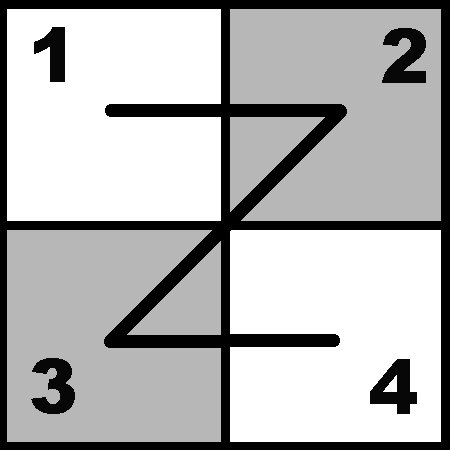
- Conceptualizing
- Relationship Story Signpost 1
The cult envisions Rosemary as the replacement for Terry. Guy drugs her with Minnie’s desert, the “mouse.” She is led to believe the rape experience was a dream.
- Relationship Story Journey 1 from Conceptualizing to BeingRosemary discovers she is pregnant and must give in to the plans of the Castevets and Guy regarding her pregnancy. She has a world of expectations about being pregnant, but the reality is harsher than she imagined.
- Being
- Relationship Story Signpost 2
Rosemary must deal with being pregnant as the Devil develops inside her body. She eats raw meat, lives with pain, loses weight, and tries to believe everything is okay.
- Relationship Story Journey 2 from Being to Becoming
At her wits end, Rosemary seeks the advice of her friends. She wants her baby to be okay, but the pain frightens her. The baby stops the pain, and then only the information in Hutch’s book indicates there is still something very wrong. She becomes stronger in her resolve to protect her child.
- Becoming
- Relationship Story Signpost 3
The realization that Dr. Sapirstein is a witch drives Rosemary to escape. She has become the protecting mother. Even when she is caught, she finally fights for her child.
- Relationship Story Journey 3 from Becoming to Conceiving
Even though she is told her child is dead, Rosemary knows it’s alive and is determined to save it. She has literally become a mother, but she must devise a way to find the child. She secretly refuses to take the drugs and eventually breaks through to the Castevets’ apartment.
- Conceiving
- Relationship Story Signpost 4
Rosemary is stunned by the reality of who her child’s father is. But in order to be a mother, she must conceive of a way to do it. The novel describes the inner process she goes through more clearly, but the film does show Roman coaxing her to “just look at the child.” As Rosemary stares at the child, she begins to see herself as the mother of the child, despite who he is.
Plot Progression Visualizations
Dynamic Act Schematics
OS:  MC:
MC:  IC:
IC:  RS:
RS: